


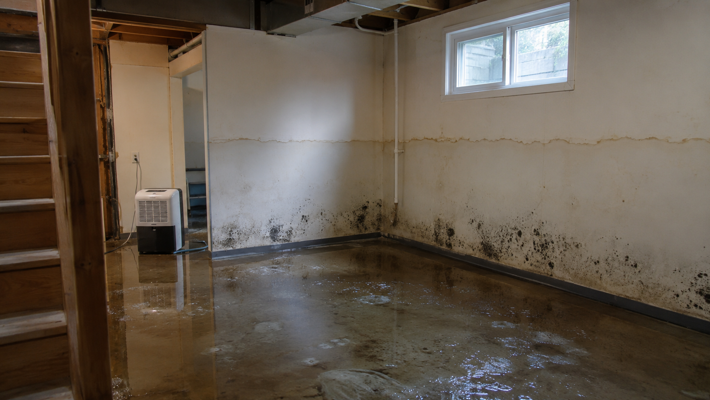
Mold After Flooding in Louisville, KY: What to Do First

Your basement took on water. Maybe it was a heavy rain, a burst pipe, or one of the flooding events that’s been hitting Bullitt County and the Salt River corridor hard this year. The water is gone now — or mostly gone — and you’re wondering if you’re in the clear. You’re not. Mold after flooding is one of the most common problems Louisville homeowners face, and it can start before the carpet even dries. Here’s what’s actually happening inside your walls, how fast it moves, and what to do about it.
How Fast Mold Grows After a Flood
Twenty-four to 48 hours. That’s the window. Once water saturates drywall, wood framing, carpet padding, or insulation, mold spores — which are already present in every home — have everything they need to start colonizing.
By day three or four, visible growth often appears. By the end of the first week, you can have active mold colonies spreading through wall cavities you can’t see without pulling materials apart.
Why Basements Are the Worst Case
Basements hold moisture longer than any other part of the house. They’re cooler, darker, and less ventilated. Water that soaks into a concrete block wall or a poured foundation doesn’t just evaporate — it wicks into the surrounding framing. A basement that looks dry on the surface can have saturated stud bays and soaked insulation for weeks.
If your basement floods, assume there’s a mold risk even if you don’t see any yet.
What to Do in the First 48 Hours
Speed matters more than almost anything else here. The faster you extract standing water and begin drying, the smaller your mold problem will be.
Get the water out first. A wet/dry shop vac works for small amounts, but if you had more than an inch of standing water, you need a pump or a professional water extraction service. Don’t rely on fans alone — moving air around wet materials doesn’t remove the moisture fast enough.
After extraction, run dehumidifiers continuously. Industrial-grade dehumidifiers pull far more moisture per hour than the units you buy at a hardware store. If you had significant flooding, renting or calling a restoration company for commercial equipment is worth it.
Pull wet materials early. Carpet, carpet padding, and drywall that got soaked beyond the first few inches are not salvageable. Trying to dry them in place almost always leads to mold inside the wall. It’s a hard call to make, but cutting your losses early saves you a much bigger remediation job later.
Signs Mold Is Already Growing
You might not be able to see it. Mold loves to grow behind drywall, under flooring, and inside wall cavities. But there are signs.
A musty smell is usually the first indicator. It’s not always strong — sometimes it’s just a faint earthy odor that wasn’t there before. That smell is mold off-gassing, and it means active growth somewhere nearby.
Visible discoloration on walls or ceilings — dark spots, fuzzy patches, or streaks that weren’t there before — is obvious mold. But visible mold is almost always just the surface layer of a larger colony behind the material.
Allergy symptoms that get worse when you’re in the basement or in certain rooms can also point to a mold problem you haven’t found yet. Runny nose, itchy eyes, and respiratory irritation are common reactions.
What Flood Mold Remediation Actually Involves
A lot of homeowners try to handle this with bleach and elbow grease. Bleach kills surface mold on non-porous materials, but it doesn’t penetrate drywall or wood. Scrubbing the surface of a moldy stud doesn’t address the mold that’s grown into the wood fiber itself.
Professional mold remediation after flooding involves a few things that DIY approaches can’t replicate.
First, a proper inspection with moisture meters and thermal imaging. This tells you where moisture is hiding — not just where you can see it.
Second, containment. During remediation, affected areas are sealed off to prevent mold spores from spreading to unaffected parts of the house. Negative air pressure and HEPA filtration are used to capture airborne spores.
Third, removal of affected materials. Drywall, insulation, and flooring that can’t be dried and cleaned are removed and bagged for disposal.
Fourth, treatment of structural materials. Wood framing and concrete that can be saved is treated with antimicrobial agents that address mold at the surface and slightly below it.
Finally, documentation. A reputable company will document the work for your insurance claim, which matters when you’re dealing with a water damage insurance claim in Kentucky.
Does Homeowner’s Insurance Cover Flood Mold?
This is where a lot of Louisville homeowners get caught off guard. Standard homeowner’s insurance policies typically do not cover flooding from outside the home — that’s a separate flood insurance policy. But if the water came from a burst pipe, a failed sump pump, or an appliance leak, your homeowner’s policy may cover both the water damage and the resulting mold remediation.
The key is acting fast and documenting everything before you clean anything up. Take photos and video of the flooding, the water line, and any visible mold. Call your insurance company before you start major demolition. And work with a restoration company that handles insurance claims directly — it makes the process significantly easier.
Mold After Flooding FAQs
How long does it take for mold to grow after a basement flood?
Mold can begin growing within 24 to 48 hours of water exposure, especially in warm, humid conditions. Visible mold often appears within 3 to 7 days. If your basement floods, don’t wait to see mold before acting — by the time it’s visible, it’s already well established.
Can I clean up flood mold myself?
For small areas — less than 10 square feet of surface mold on a non-porous surface — EPA guidance says DIY cleanup is reasonable. But flood mold almost always involves porous materials like drywall and wood, and often extends into wall cavities. In those cases, professional remediation is safer and more effective.
Does mold always smell after a flood?
Not always, especially early on. A musty or earthy smell usually appears within a few days of active mold growth. But mold growing inside wall cavities can go undetected by smell for weeks. If your basement floods, a moisture inspection is the most reliable way to find hidden mold.
How much does flood mold remediation cost in Kentucky?
Costs vary based on the extent of damage and the materials affected. Small contained jobs can run $500 to $1,500. Larger remediation projects involving multiple rooms or significant structural material removal can run $3,000 to $10,000 or more. The longer you wait, the larger the affected area — which is why early action almost always means lower total cost.
Will mold come back after remediation?
Not if the underlying moisture problem is fixed. Mold remediation removes the existing growth and treats surfaces, but if water is still getting into your basement — through foundation cracks, grading issues, or a failing sump pump — mold will return. A good remediation company will identify the moisture source, not just treat the symptom.
Flooding moves fast, and mold moves faster than most people expect. If your Louisville home took on water, Mold Hunters can inspect for hidden moisture, assess mold risk, and get your home back to safe. Call us or request a free estimate online.


