


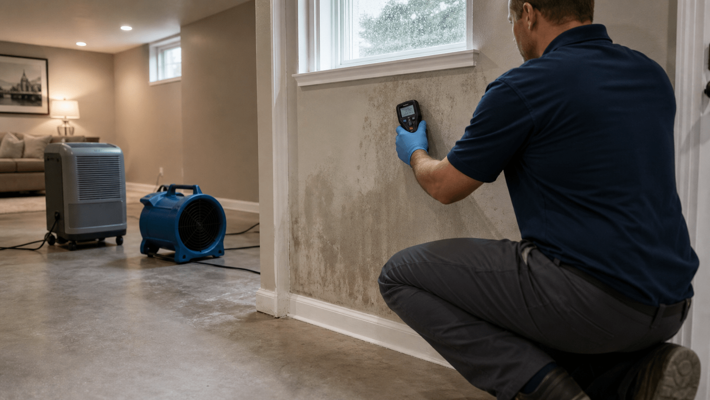
Water Damage After a Kentucky Storm: Signs You Need Help

A Kentucky storm can be over in an hour, but the water it leaves behind can keep moving through your home long afterward. Rain can enter through a damaged roof, window flashing, foundation wall, or backed-up drain, then travel behind finishes before you see a single stain. That is why water damage after a Kentucky storm needs a careful look, especially in basements, attics, and rooms along exterior walls.
You do not need to diagnose every wet material yourself. Your job is to keep people safe, record what you can see, and get the drying process started before hidden moisture turns a manageable repair into a larger project. Here is what to watch for and what a professional response should include.
Start With Safety and a Clear Record of What Happened
Storm damage can involve more than wet carpet. A fallen branch, damaged roof, downed electrical line, sump-pump failure, or contaminated floodwater can change what is safe to do next. If the building has structural damage, water near electrical equipment, a gas smell, or sewage, stay out of the area and follow local emergency guidance.
From a safe location, take wide and close photos of the exterior, water lines, ceiling stains, damaged belongings, and affected rooms. Note when the storm occurred, when you first found the damage, and whether water is still entering. That record helps both the restoration team and your insurer understand the loss without asking you to recreate details later.
Do not climb onto a wet roof or enter a flooded basement to get better pictures. And do not turn on appliances, fans, or lights in a wet area until you know the electrical system is safe. If you can safely stop a small active source, such as closing an accessible window, do that. Otherwise, wait for qualified help.
Seven Signs of Water Damage After a Storm
Some storm damage is obvious. A ceiling drip, soaked carpet, or standing water makes the need for help clear. Other losses reveal themselves slowly because water follows the path of least resistance behind walls and below floors.
1. New Ceiling Stains or a Sagging Spot
Brown rings, fresh discoloration, bubbling paint, or a ceiling that looks swollen can point to water entering through the roof, flashing, attic vents, or an upper wall. Water may travel along rafters or framing before it reaches the ceiling below the actual entry point.
Treat a sagging ceiling as a safety concern. Move people and valuables away from the area, do not puncture or pull on the material, and arrange an assessment. The source needs repair, but the wet insulation, drywall, and framing also need to be evaluated.
2. Damp Baseboards, Soft Drywall, or Peeling Paint
After wind-driven rain, water can enter around windows, doors, siding gaps, and foundation openings. Drywall often absorbs moisture at its cut edge near the floor, while trim can swell or pull away from the wall. A wall may feel cool or look slightly discolored before it looks obviously wet.
Pressing hard on drywall can make a weak area worse, so use a light touch. If it feels soft, paint is bubbling, or the baseboard is warped, avoid covering it with fresh paint. A moisture check can show whether the issue is limited to the finish or extends into the wall cavity.
3. A Musty Odor That Was Not There Before
An earthy smell after a storm does not prove there is mold, but it does mean moisture may still be present. Wet carpet padding, insulation, drywall paper, wood, or stored contents can hold odor even after the visible water is gone. Basements, closets, crawl spaces, and rooms with exterior walls are common places for the smell to collect.
Open windows only when outdoor conditions will not add more humidity or rain. More importantly, do not mask the odor with fragrance. The right next step is to identify and dry the affected materials. Our guide on how long mold takes to grow after water damage explains why early drying matters.
4. Flooring That Swells, Cupps, or Separates
Water can wick underneath flooring from a wet wall, a flooded basement, or a leak at a door. Wood flooring may cup or separate. Laminate can swell at the seams. Carpet can feel dry on top while the pad below stays wet, and vinyl edges may lift when moisture reaches the subfloor.
Do not assume a surface fan solves the problem. A proper water damage restoration assessment considers the water source, the length of exposure, the flooring system, and moisture readings in nearby materials. Those details determine whether drying can save the material or controlled removal is safer.
5. Water Around Windows, Doors, or Exterior Walls
Puddles on a sill, damp drywall below a window, or a wet spot at a patio door can come from wind-driven rain or a failed seal. The visible spot may be small while water behind the trim travels farther than expected. Look for loose caulk, damaged screens, staining at corners, and water marks that appear after each heavy rain.
Take photos before moving furniture or removing trim if you can do so safely. Then have the entry point and interior materials checked. Recaulking the outside alone does not dry insulation, framing, or drywall that may already be wet.
6. A Wet Basement, Crawl Space, or Utility Room
Kentucky storms can overwhelm a sump system, send surface water toward a foundation, or expose a drainage issue that is usually hidden. Look for standing water, damp concrete, white mineral deposits on a foundation wall, wet insulation, or water tracks near the wall-floor joint. In a crawl space, check only if the access is safe and the area is free from electrical or structural hazards.
Groundwater and storm runoff can be contaminated. Keep children and pets away, and avoid handling soaked materials without appropriate protection. If your basement took on water, this basement flooding guide for Bullitt County homeowners can help you understand common causes and the immediate response.
7. Water That Appears Far From the Obvious Leak
Storm water can run along roof decking, framing, ductwork, pipes, and the back side of drywall. A stain in the living room may begin at a roof penetration several feet away. Water found near an interior wall can also come from a window, exterior wall, or attic above it.
That is why visual inspection alone has limits. Moisture meters, dry reference readings, and targeted investigation help a restoration team define where water traveled. It is better to open a small, informed area when necessary than to repaint a stain and discover a larger problem months later.
What Professional Drying Looks Like After Storm Water Intrusion
Extraction is only the first step when water reaches building materials. A professional crew begins by identifying the source, setting safe work boundaries, and mapping the rooms and materials that may be affected. They then remove bulk water where possible and assess drywall, insulation, flooring, trim, contents, and structural materials.
Drying equipment is selected to match the actual conditions. Air movers can help evaporate moisture from appropriate surfaces. Dehumidifiers remove moisture from the air so materials can keep drying. Sometimes wet insulation, damaged carpet padding, or compromised drywall must be removed because it cannot be dried or cleaned appropriately. The plan should be based on the source and condition of the material, not a promise that everything can be saved.
Monitoring matters. A room can look dry while materials below the surface remain wet. Technicians compare readings over time and against unaffected areas before repairs begin. This measured approach is part of the water damage restoration process, and it gives you useful documentation for your records.
What You Can Do While You Wait for Help
Once the area is safe, move dry belongings away from the wet zone and place aluminum foil or wood blocks under furniture legs if that can be done without entering hazardous water. Pick up loose items from dry areas before humidity reaches them. Keep a list of damaged contents and save receipts for reasonable emergency expenses.
Avoid pulling up carpet, opening walls, or throwing away damaged materials until you have documented them and understand the safety implications. Do not use a household vacuum on standing water. Do not mix cleaning products, and do not use bleach as a substitute for drying. Large or contaminated losses need a controlled plan, particularly when drywall, insulation, or hidden cavities are involved.
If you have a safe, dry path to the electrical panel and know the affected circuit, follow the advice of a qualified electrician or emergency professional. Otherwise, leave electrical decisions to the people trained to make them. The same goes for roof tarping, structural shoring, and sewage cleanup.
Insurance Questions to Ask Early
Call your insurer promptly after a storm loss and ask how to document emergency mitigation. Water coverage can depend on where the water came from, whether the damage resulted from a covered storm event, and the details of your policy. A restoration contractor can document moisture, affected materials, and completed work, but cannot decide coverage for the insurer.
Ask these practical questions: What photos or records should I provide? Are there preferred procedures for emergency drying? Is there a deductible or a separate water or flood endorsement? Do you need to approve a repair before permanent reconstruction begins? Write down the claim number and the person you spoke with.
Good documentation supports clear decisions. Keep storm alerts, photos, contractor reports, moisture records, invoices, and your timeline together. If the storm also caused visible mold or a persistent odor, a mold remediation evaluation can determine whether the scope needs to move beyond drying and repair.
Preventing the Next Storm Loss
No home can be made completely storm-proof, but a few maintenance habits can reduce the chance of water getting inside. Clean gutters, confirm downspouts discharge away from the foundation, and watch for soil that directs water toward the house. Have damaged shingles, flashing, window seals, and siding repaired before the next heavy rain.
Inside, test the sump system according to the manufacturer guidance, check appliance hoses, and keep stored belongings off a basement floor when possible. After every major storm, walk the home with a flashlight and look in the attic, around windows, below bathrooms, and along basement walls. Small clues are easier to manage before they become a soaked wall or floor.
Water damage after a Kentucky storm is easier to control when the response starts early and follows the water beyond what you can see. Mold Hunters provides same-day water damage restoration for Louisville homeowners, Shepherdsville, and nearby communities, with moisture inspection, drying, mold remediation, and reconstruction when needed. Call Mold Hunters at (502) 531-8586 or request a free estimate online.
Practical Restoration Guidance
A professional response follows a clear process
A professional restoration response is a documented process for finding the source of property damage, controlling immediate hazards, measuring affected materials, removing contamination when necessary, and drying or rebuilding the property.
For property restoration in Kentucky and Southern Indiana, the right sequence depends on the source, the materials involved, and whether occupants can remain safely in the building. Mold Hunters starts with conditions at the property, not a one-size-fits-all treatment.
Find the source
Trace where the damage began and how far water, smoke, odor, or contamination traveled.
Control hazards
Stabilize immediate risks and set the right containment or safety controls before cleanup begins.
Measure and restore
Document affected materials, remove what cannot be saved, then clean and dry the structure.
Verify and rebuild
Confirm the area is ready, preserve the project record, and complete permanent repairs.
Safety first
What to do before the restoration crew arrives
Do not enter electrically energized water, disturb suspected sewage, or walk through a fire-damaged structure that has not been cleared. Follow instructions from local emergency officials.
- Stop and assess immediate danger Leave for fire, electrical, structural, sewage, or breathing hazards. Contact emergency services when needed.
- Limit the source only when it is safe Shut off a known water supply or HVAC system only if the control is safely accessible.
- Document conditions from a safe location Take wide and close photographs, record when the loss was found, and preserve receipts and communications.
- Call a qualified restoration provider Describe the source, affected rooms, visible materials, odors, and vulnerable occupants.
- Contact the insurer Ask about mitigation duties, deductibles, documentation, and approvals without delaying reasonable loss control.
Floodwater may contain biological or chemical hazards. Homeowners should not treat contaminated water, widespread mold, or unstable fire debris as a routine cleaning project.
A record you can follow
Why documentation and verification matter
Good restoration work produces a record. Depending on the job, that record can include initial photographs, moisture readings, affected-material notes, equipment logs, disposal records, progress photographs, and a final walkthrough. Documentation helps the owner understand what changed and gives an insurance adjuster a clearer basis for reviewing covered work.
Verification should match the loss. Water work may require moisture readings compared with dry materials. Mold work requires source correction and a visibly clean contained area. Fire restoration may require repeated inspection for soot and odor in connected spaces.
Plain-language definitions
Common restoration terms
- Mitigation
- Immediate work intended to stop continuing damage and stabilize the property before permanent repairs.
- Remediation
- Controlled correction of contamination through source control, containment, removal, cleaning, and verification.
- Structural drying
- Measured removal of excess moisture using extraction, airflow, dehumidification, and monitoring.
- Reconstruction
- Repair or replacement after the affected area has been cleaned, dried, and stabilized.


