


Basement Sewer Backup in Louisville? Who to Call First

Report the backup from a safe place
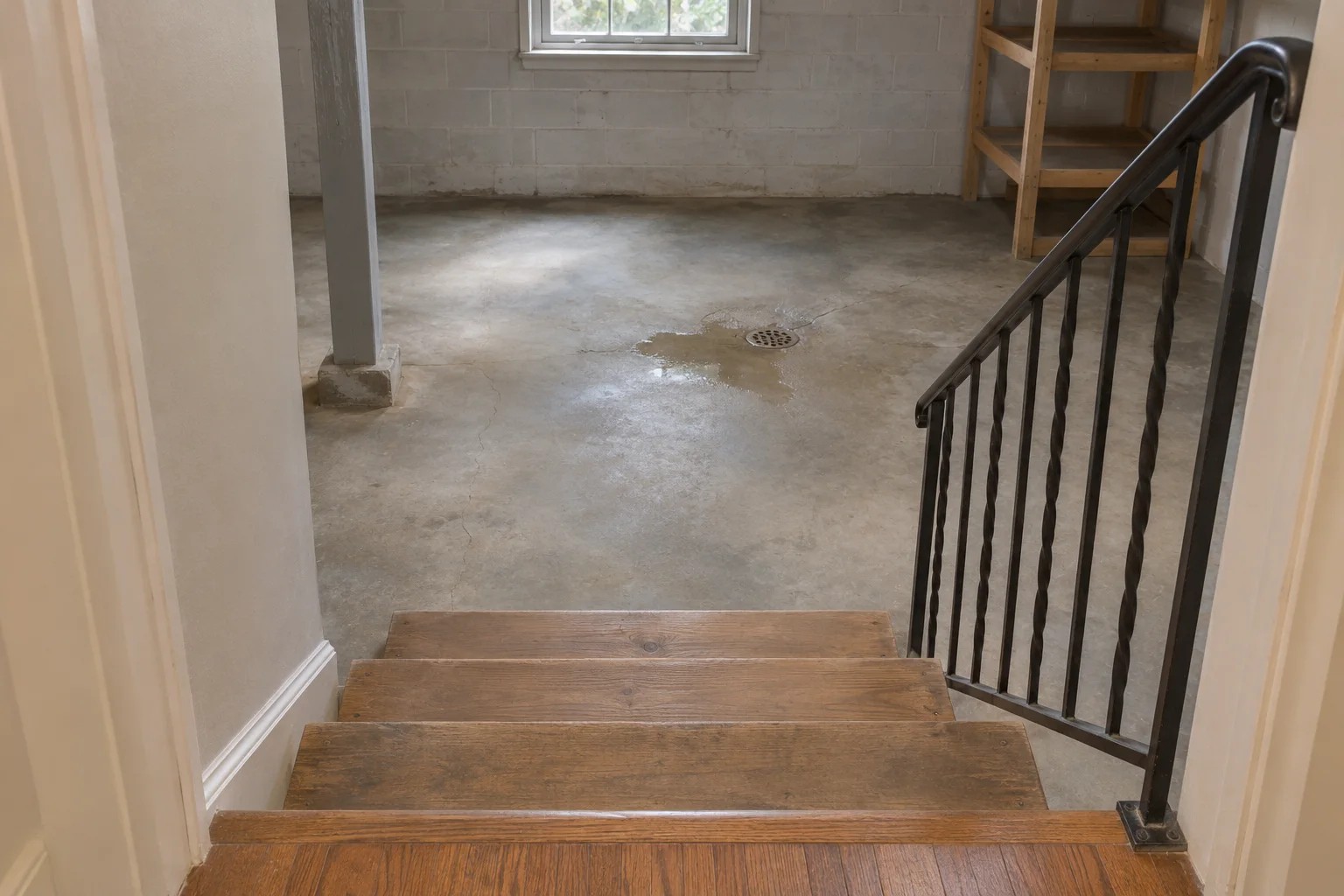
If water is coming up through a basement floor drain, shower, sink, or toilet, stay out of the affected area and keep children away. From a safe, dry location, call Louisville MSD first if it serves your address. MSD asks customers to report a sewer backup so it can check whether the problem is in its system. Its contact page lists 502-540-6000, available 24 hours a day, seven days a week for non-billing matters. See also MSD’s first-call guidance.
If another utility serves your address, contact that utility instead. If you know the property uses an onsite septic system, see the separate note below. A utility call and a cleanup call serve different purposes: you can discuss the building damage with a restoration provider while the source is being addressed.
Keep the affected area off limits
Treat the water as potentially contaminated and avoid contact. The CDC warns that floodwater containing human waste can cause illness and advises staying out of contaminated water. Its floodwater guidance also says to keep children away from affected areas. Do not go downstairs to investigate or take photos if doing so would take you into the affected area.
Keep away from electrical hazards. If reaching the main electrical switch would require crossing standing water, the CDC advises calling an electrician. Do not enter water to operate a switch or equipment. Tell the utility and any responding professional about the access concern.
What to tell MSD
Share only what you already know from a safe place. MSD says its customer-relations staff may use mapping to verify an address or location for a request; have your service address ready. Useful observations include:
- When you first noticed the water and which drain or fixture you saw affected.
- Whether you had already noticed trouble at more than one fixture.
- Whether the backup followed rain and whether water is still entering, if you can tell safely.
- Any electrical hazard or reason a responder may have difficulty accessing the area.
Ask who will check the public system and what you should do while waiting. Do not run water or flush a fixture to test the line. If you do not know an answer, say so; the person taking the report can ask follow-up questions.
For example, a Louisville homeowner might report that water appeared at a basement drain after rain and that a second fixture had been slow earlier. Those details give the responders context, but neither assigns responsibility for the problem. MSD documented residential sanitary sewer backups during the April 2025 storm; that historical event does not establish the cause of a new backup. Follow the current instructions given for your address.
Who handles each part?
| Contact | What to discuss |
|---|---|
| MSD or your sewer utility | Report the backup and ask about a check of its public system and the next step for your address. |
| Licensed plumber | Discuss inspection and work on the private plumbing side when appropriate, including after the utility’s response. |
| Restoration provider | Describe the suspected contamination and affected rooms or materials; ask whether the team has experience with contaminated-water damage and can assess the building. |
| Electrician | Report a wet electrical hazard or inaccessible switch and ask for a safety assessment. |
The property service connection links a home to the sewer main, but the division of responsibility can vary by locality. Ask MSD what its finding means for your particular address rather than assuming where its responsibility ends. Its home plumbing guide also explains that one affected fixture and trouble at several fixtures can point to different locations; the pattern alone is not a diagnosis.
If a plumber is needed, describe what MSD has told you and ask how the private side will be assessed. Kentucky offers a license search that includes plumbing records. Coordinate with the appropriate party on finding and controlling the inflow; addressing wet materials does not by itself resolve its source.
Arrange the building cleanup
You do not need to wait for a lengthy responsibility determination to ask about the affected building. The EPA recommends a professional experienced with contaminated-water damage when sewage caused the water or mold damage. Explain what you observed, what the utility or plumber has said, and whether water may still be entering. Ask the provider to confirm whether the work is within its scope and how it will coordinate with the party addressing the source.
Stopping the inflow and addressing affected materials are separate parts of the response. EPA notes that standing water and wet building materials can support microbial growth; see its home mold guidance. Ask what areas need assessment and what the next steps are for the materials and moisture; avoid entering the affected area to make that assessment yourself.
If your address is on septic
If you know the property uses an onsite system, contact your local health department about a septic complaint. Kentucky describes its onsite sewage program and that contact route on its environmental management page. Explain the symptoms from a safe place and ask which qualified professional should assess the system.
For help with the building after a water loss, talk to Mold Hunters about water damage restoration. Describe the suspected sewage or contamination and ask the team to confirm whether it is the right fit for your situation.
Practical Restoration Guidance
A professional response follows a clear process
A professional restoration response is a documented process for finding the source of property damage, controlling immediate hazards, measuring affected materials, removing contamination when necessary, and drying or rebuilding the property.
For property restoration in Kentucky and Southern Indiana, the right sequence depends on the source, the materials involved, and whether occupants can remain safely in the building. Mold Hunters starts with conditions at the property, not a one-size-fits-all treatment.
Find the source
Trace where the damage began and how far water, smoke, odor, or contamination traveled.
Control hazards
Stabilize immediate risks and set the right containment or safety controls before cleanup begins.
Measure and restore
Document affected materials, remove what cannot be saved, then clean and dry the structure.
Verify and rebuild
Confirm the area is ready, preserve the project record, and complete permanent repairs.
Safety first
What to do before the restoration crew arrives
Do not enter electrically energized water, disturb suspected sewage, or walk through a fire-damaged structure that has not been cleared. Follow instructions from local emergency officials.
- Stop and assess immediate danger Leave for fire, electrical, structural, sewage, or breathing hazards. Contact emergency services when needed.
- Limit the source only when it is safe Shut off a known water supply or HVAC system only if the control is safely accessible.
- Document conditions from a safe location Take wide and close photographs, record when the loss was found, and preserve receipts and communications.
- Call a qualified restoration provider Describe the source, affected rooms, visible materials, odors, and vulnerable occupants.
- Contact the insurer Ask about mitigation duties, deductibles, documentation, and approvals without delaying reasonable loss control.
Floodwater may contain biological or chemical hazards. Homeowners should not treat contaminated water, widespread mold, or unstable fire debris as a routine cleaning project.
A record you can follow
Why documentation and verification matter
Good restoration work produces a record. Depending on the job, that record can include initial photographs, moisture readings, affected-material notes, equipment logs, disposal records, progress photographs, and a final walkthrough. Documentation helps the owner understand what changed and gives an insurance adjuster a clearer basis for reviewing covered work.
Verification should match the loss. Water work may require moisture readings compared with dry materials. Mold work requires source correction and a visibly clean contained area. Fire restoration may require repeated inspection for soot and odor in connected spaces.
Plain-language definitions
Common restoration terms
- Mitigation
- Immediate work intended to stop continuing damage and stabilize the property before permanent repairs.
- Remediation
- Controlled correction of contamination through source control, containment, removal, cleaning, and verification.
- Structural drying
- Measured removal of excess moisture using extraction, airflow, dehumidification, and monitoring.
- Reconstruction
- Repair or replacement after the affected area has been cleaned, dried, and stabilized.


